Tongue and lip tie therapy in North Dallas
Functional evaluations and therapy before and after tongue, lip and cheek tie release for babies, children and teens, provided in your home across Celina, Prosper, Frisco, McKinney, Aubrey, Little Elm and Anna.

NTX Feeding & Myofunctional Therapy Institute is an in-home pediatric practice focused on tethered oral tissues (TOTs): tongue, lip and cheek ties. Care is led by Meagan Dungan, M.S., CCC-SLP, a pediatric speech-language pathologist who specializes in infant feeding, oral motor therapy and orofacial myofunctional therapy.
We look at how your child's tongue, lips and jaw actually function during feeding, breathing, swallowing and speech, not just how the frenulum looks. Then we build a therapy plan and coordinate with your pediatrician, lactation consultant and release provider so everyone is working from the same picture.
How we help
Functional TOT evaluation
A detailed, in-home look at tongue, lip and cheek function during a real feed or meal, with measurements you can share with your release provider.
Infant feeding therapy
Latch, suck, swallow and breathing support for breast and bottle-fed babies, before and after a release.
Therapy before a release
Builds strength and coordination, eases tension and sets a baseline. Sometimes it shows a release isn't needed.
Therapy after a release
Retrains the tongue to use its new range of motion so old compensations don't stick.
Myofunctional therapy
Tongue rest posture, lip seal, nasal breathing and a mature swallow for children and teens.
Oral motor therapy
Jaw, lip and tongue strength and coordination for chewing, drinking and clear speech.

Signs a tie may be affecting function
- Trouble latching, clicking or leaking milk during feeds
- Long, frequent or exhausting feeds, or slow weight gain
- Nipple pain or damage for the nursing parent
- Gagging, picky eating or slow, messy eating in toddlers
- Mouth breathing, snoring or open mouth posture
- Low tongue posture or a tongue thrust swallow
- Speech sounds that are hard to make clearly
- Difficulty with cups, straws or chewing
How care works with NTX
| Step | What happens |
|---|---|
| 1. Reach out | Tell us your concerns by phone, email or our booking form. We'll help you decide whether to start with an evaluation or a virtual consult. |
| 2. Functional evaluation | In your home, during a real feed or meal. We assess structure and function, review history and give you a written plan. |
| 3. Prepare | Therapy and home exercises to build skills, plus referrals for bodywork or lactation support when helpful. |
| 4. Release, if needed | Completed by a trained release provider. We share our findings and coordinate timing with them. |
| 5. Retrain | Post-release therapy that fits your provider's aftercare plan and helps your child use their new range. |
| 6. Check progress | We re-check feeding, breathing, speech and sleep goals, then plan next steps or discharge. |
Why in-home care matters for ties
We see your baby feed in their own chair, bottle or nursing position, and your toddler eat their real foods at your table. That means fewer guesses, strategies that fit your routine, and a plan the whole family can follow.
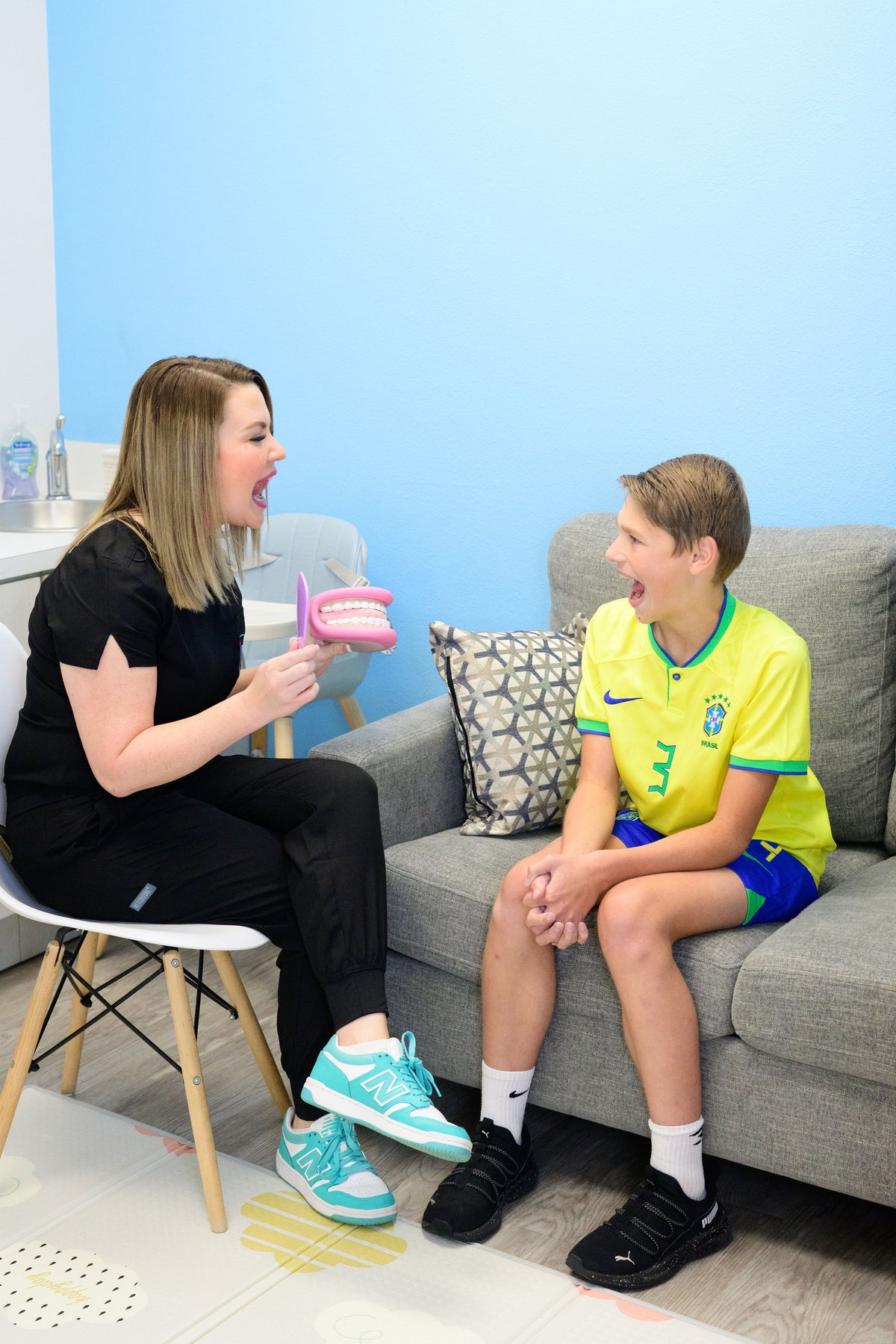
Serving North Dallas families
NTX provides in-home evaluations and therapy in Celina, Prosper, Frisco, McKinney, Aubrey, Little Elm and Anna, and surrounding Collin and Denton County communities. Virtual consultations are available for families outside our travel area. We work alongside trusted local providers, including frenectomy providers, pediatric dentists, lactation consultants and bodyworkers. See our preferred providers.
Questions families ask
Do you perform tongue tie releases?
No. NTX provides the functional evaluation and the therapy before and after a release. Releases are done by trained pediatric dentists or ENTs, and we coordinate closely with your release provider.
Does every tongue or lip tie need to be released?
No. The decision should be based on how the tongue and lips function, not on how they look. Many children improve with therapy alone, and a functional evaluation helps your family and your provider decide.
When should therapy start after a release?
We plan the timing with your release provider so therapy fits their aftercare plan. Ideally we see your child before the release to build skills and set a baseline, and again soon after to retrain the tongue.
What ages do you see?
We see babies, children and teens, from birth to 18 years.
Do you come to our home?
Yes. Evaluations and therapy happen in your home across Celina, Prosper, Frisco, McKinney, Aubrey, Little Elm and Anna, and virtual consultations are available for families farther away.
Do you take insurance?
NTX is a private-pay practice. You will receive a Good Faith Estimate before services begin, and our in-home therapy page explains rates and payment.

Learn more
Tongue and lip ties: a one-page guide
Signs in babies and children, and how the team approach works. Free with your name and email.
Wondering if a tie is affecting your child?
Start with an in-home functional evaluation. You'll leave with clear answers about how your child's tongue, lips and jaw are working, a written plan, and coordination with your release provider if a release is recommended.